

Relationships do not end because problems arise…..
Discover broad, practical solutions to marital conflict inspired by a powerful story from Buddha’s life. Learn how mindfulness, compassion, and detachment can heal relationships and prevent divorce.
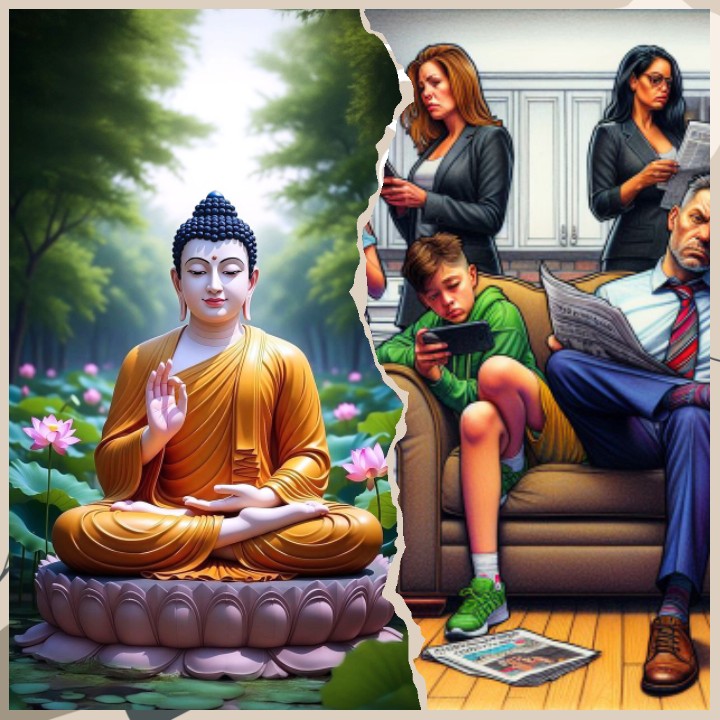
Modern relationships are breaking not because love disappears, but because peace disappears. Stress, ego, anger, and unrealistic expectations slowly replace understanding. While modern psychology offers effective tools, ancient wisdom—especially the teachings of —provides timeless guidance on handling suffering, attachment, and conflict.
This article focuses broadly on solutions to relationship breakdown, illustrated through a profound Buddha story that applies directly to marriage and family life today.
**
1. The Root Cause of Relationship Suffering
According to Buddha’s teachings, suffering (Dukkha) arises from:
- Attachment
- Desire
- Ego
- Uncontrolled emotions
Most marital conflicts are not about money, habits, or responsibilities—but about how strongly we cling to expectations and how deeply we react when they are unmet.
2. Broad, Practical Solutions for Modern Relationships
A. Mindful Response Over Emotional Reaction
Arguments escalate when emotions control speech.
Solution:
- Pause before responding
- Observe emotions without acting on them
- Speak after calm returns
This single habit prevents countless relationship breakdowns.
B. Letting Go of Ego and “I Am Right”
Buddha taught that clinging to ego strengthens suffering.
Solution:
- Replace “winning the argument” with “saving the relationship”
- Accept that peace is more valuable than proving a point
C. Compassion as a Daily Practice
Many marriages fail due to lack of empathy, not lack of love.
Solution:
- Practice compassion even during disagreement
- Try to understand pain behind the partner’s behavior
D. Detachment from Unrealistic Expectations
Expecting one person to fulfill every emotional need leads to disappointment.
Solution:
- Accept imperfection
- Allow space for individuality
- Love without control
Detachment does not mean indifference—it means freedom from suffering.
E. Mindfulness in Daily Life
Small moments define relationships.
Solution:
- Eat together mindfully
- Listen fully without distraction
- Be present, not just physically available
3. A Powerful Buddha Story: The Angry Husband
The Story
Once, a man came to Buddha furious and full of anger toward his wife. He complained, blamed, and demanded justice. Buddha listened silently.
Then Buddha asked him a simple question:
“If someone offers you a gift and you refuse to accept it, to whom does the gift belong?”
The man replied, “To the one who offered it.”
Buddha smiled and said:
“In the same way, if you refuse anger, it remains with the one who brings it.”
The man realized that his anger—though triggered by his wife—was his own burden, not hers.
4. Lessons from the Buddha Story for Marriage
Lesson 1: Anger Is a Choice
We often believe others make us angry. Buddha teaches that anger is something we accept or reject.
Lesson 2: Peace Begins Internally
Changing one’s inner response can transform the entire relationship dynamic.
Lesson 3: Silence with Awareness Is Powerful
Not every insult or disagreement needs a reply. Calm awareness often dissolves conflict.
5. Combining Buddha’s Wisdom with Modern Relationship Solutions
| Modern Approach | Buddha’s Teaching |
|---|---|
| Therapy | Right Understanding |
| Anger management | Right Effort |
| Mindfulness practice | Right Mindfulness |
| Emotional regulation | Right Action |
| Healthy boundaries | Middle Path |
This integrated approach helps couples grow emotionally and spiritually.
6. An Important Clarification
Buddha never taught silent suffering or tolerating abuse.
Mindfulness and compassion should protect dignity, not erase it.
Walking away from harm is also part of the Middle Path.
Conclusion
Relationships do not end because problems arise—they end when peace is abandoned. Buddha’s teachings remind us that freedom from suffering begins within. When couples learn to observe emotions instead of being controlled by them, marriages gain clarity, balance, and resilience.
In a noisy world full of reactions, choosing mindfulness, compassion, and detachment becomes the most powerful solution to saving relationships.